What to check before booking a desert quad ride in Dubai
A quad bike tour dubai can be a straightforward booking, but the details matter. Desert driving is not the same as riding on a track or a farm, and a little care before you pay can prevent a rough start on the day. The aim is to match the ride to your experience, understand the rules, and know what is included before you travel out into the sand dunes.
Start with the rider requirements
The first point is who is allowed to drive. Operators may set their own age limits, and these can vary by vehicle type and route. Check whether a driving license is required for the quad bike you want, and whether it must be a specific category or simply a valid license from your home country. If the answer is unclear, ask before booking rather than on arrival.
Also check whether passengers are allowed on the same vehicle, and whether children can ride as passengers. A rider who expects to share a quad may find that the booking covers one driver only. Weight limits and height guidance can also matter, especially for smaller machines. These rules are not red tape. They shape how the vehicle handles and how safe the ride feels once the terrain changes.
Look closely at the route and riding time
"Desert tour" can mean a short ride near the start point or a longer route with stops. Ask what is actually included: the riding time, the distance, the type of terrain, and whether the route is guided. Some rides focus on open sand dunes, while others combine a quad segment with a desert safari or dune bashing in a separate vehicle. Those are very different experiences.
Pay attention to how the schedule is written. A package may list a full morning or evening, but only part of that time may involve riding. There may be time for photos, a safety briefing, or transfers. That is fine if you know it in advance. It becomes a problem when a rider expects hours on a quad and gets a much shorter session.
If you are choosing between a sunset tour and another time slot, check what the route is like near the end of the day. Lower light can make dunes harder to read, and a guided route becomes more useful. The best choice depends on your comfort level, not just the view.
Check the safety setup, not just the vehicle
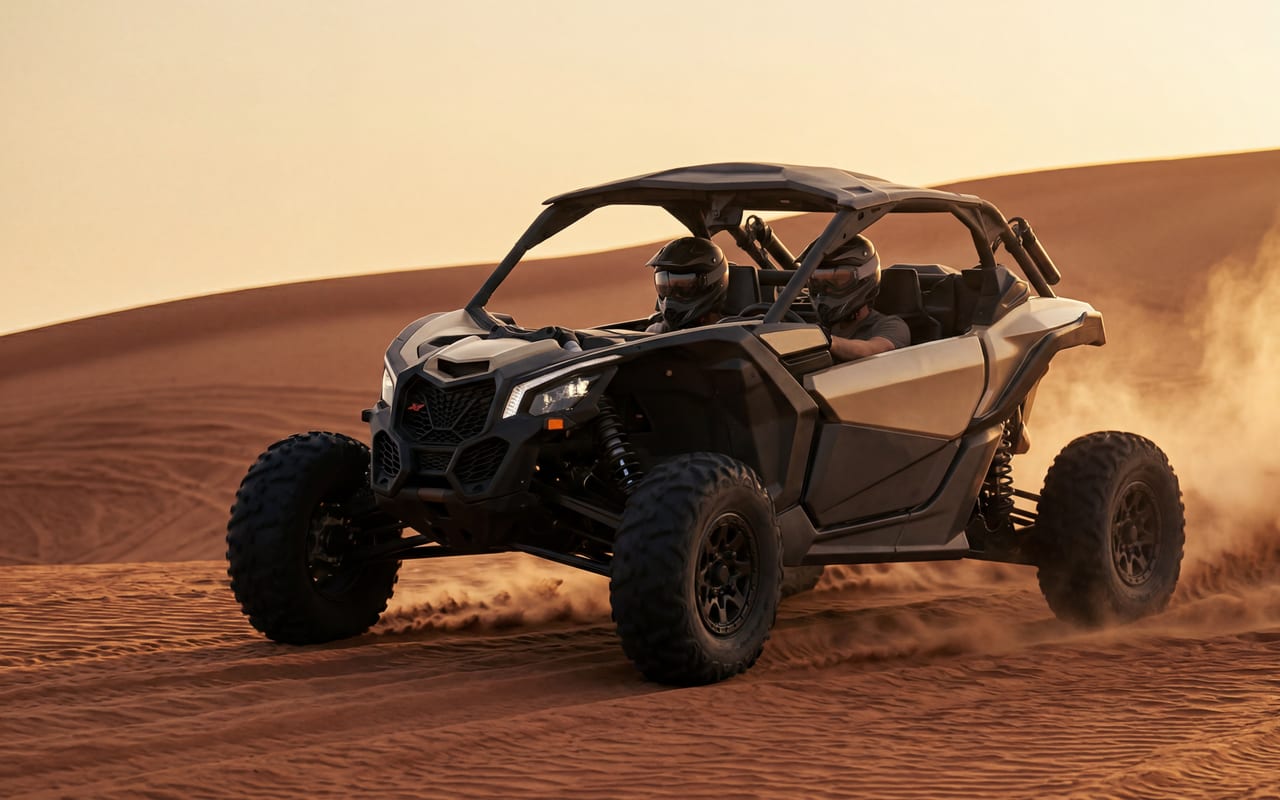
A quad bike is only one part of a safe ride. Ask whether a helmet is provided, whether it fits properly, and whether other protective gear is expected. Closed footwear, long trousers, and sun protection are sensible for desert riding. Loose scarves, flip flops, and baggy clothing can catch or slip, so they are worth avoiding.
A proper safety briefing should explain hand signals, stopping distance, how to follow the guide, and what to do if the group spreads out. It should also cover basic riding controls in plain language for beginners. If the briefing is treated as a formality, that is a sign to think carefully.
Ask about first aid and communication as well. A remote route still needs a clear plan if someone stops, falls, or feels unwell. The exact arrangement does not need to be technical, but there should be a sensible answer.
Match the ride to your experience
Beginners and experienced riders rarely want the same thing. A first timer usually benefits from gentle terrain, a steady pace, and clear instructions. Someone with more experience may want a longer route with more varied dunes. Be honest about your level. It is better to choose a controlled ride and enjoy it than to book something too demanding.
Group size changes the feel of the tour, too. A large group can mean more waiting, tighter spacing, and less individual attention. A smaller group may feel more relaxed, though the pace still depends on the slowest or fastest rider. Ask whether routes are split by ability, especially if the booking includes mixed groups.
When comparing options, it helps to keep notes on route length, riding time, group size, and rider rules. Names used by different operators can be confusing, and atvdubaidesert.com is one place where readers may want to keep those details clear. The point is not to collect promises, but to compare like with like.
Understand what is included and what is not
Before booking, read the inclusions line by line. Riding time, guide, helmet, fuel, refreshments, transfers, and entry or permit costs may be handled in different ways. Some items may be bundled, while others may be optional extras. A clear booking should make it easy to see what you are paying for.
Check what happens if weather affects the ride. Wind, heavy rain, or poor visibility can change desert plans. A responsible operator will explain how changes are handled and whether a route can be adjusted. It is also worth asking what the plan is if you arrive late, since late arrival can shorten a shared tour.
Insurance is another point to clarify in plain terms. Ask what cover applies to riders, passengers, and third parties, and what the exclusions are. Do not assume that personal travel insurance, a driving license, or a general desert safari booking covers quad riding. Read the wording and ask for clarification where needed.
Look at reviews with a practical eye
Reviews can be useful when they describe specifics: clear briefings, well organised starts, helpful guides, and routes that matched the description. Vague praise is less helpful. Look for repeated comments about delays, rushed sessions, unclear instructions, or mismatched expectations, since those are the issues that often affect the day.
At the same time, one review rarely tells the whole story. People have different skill levels and expectations. A negative comment from someone who wanted a fast ride may not matter to a beginner, while a positive comment from an experienced rider may not mean much to a first timer. Use reviews to identify patterns, then test those patterns against your own needs.
It is also sensible to check how the operator communicates before payment. Clear answers, consistent details, and straightforward wording are good signs. Confusion at the booking stage often becomes confusion on the day, especially when a group is waiting in the desert.
Ask about the start point and timing
Desert meetings can be easy to misjudge. Confirm the exact meeting point, how you get there, and how much time is allowed for check in. If transport is included, confirm where pickup starts and what time you should be ready. Leave room for city traffic and for the short walk or ride from the drop off point to the start area.
Timing also affects comfort. Midday heat can be harsh, while evening rides can cool down quickly after sunset. Bring water, sunscreen, and eye protection where appropriate. A helmet helps, but dust and glare can still be tiring. If you wear glasses, check that they sit comfortably under or alongside the gear provided.
Food and drink rules deserve a quick look too. A light meal before riding is usually more comfortable than a heavy one. If refreshments are included, check whether they come before or after the ride, and whether dietary needs can be handled. This is a small detail that can make the whole outing smoother.
Read the cancellation and change terms
Plans change, especially when a trip includes flights, hotel transfers, and other activities. Read the cancellation terms before you commit. Check the deadline for free changes, what happens with a no show, and whether a different date can be arranged. The answer may depend on how close you are to the tour date.
Also check what counts as a cancelled tour. If weather or a route closure changes the plan, you should know whether the operator offers a replacement time or a refund. Ask for the policy in writing so there is no confusion later.
Finally, keep a copy of the booking details somewhere easy to find on the day. Include the meeting point, start time, route name, inclusions, and any special requests. A short note on your phone can save time when signals are weak and the group is ready to leave.
Good preparation does not make the desert predictable, but it makes the booking easier to judge. Check the rider rules, the route, the safety setup, the inclusions, and the terms. Then choose the ride that fits your experience and schedule, rather than the one with the broadest wording. A clear booking sets the tone for a better day on the sand.